Tartan Newsletter Ed 13
23 Sep 2026

18 Sep 2026
One of the important lessons of growing up is learning that our choices matter even when the adults who teach us are not watching.
At school, we spend considerable time teaching students about responsibility, respect, kindness and good decision-making. These expectations are important not simply because they help us maintain a positive school environment, but because they are qualities we want our young people to carry with them throughout their lives.
That responsibility does not end at the school gate.
When choosing a school, it is not merely a choice between Coke or Pepsi; NAB or CBA. When joining a school we join a community. Our students become beneficiaries of and contributors to a broad community. Community has benefits and it has responsibilities for all. As members of the community, what we do when we are at school, as well as what we do outside matters.
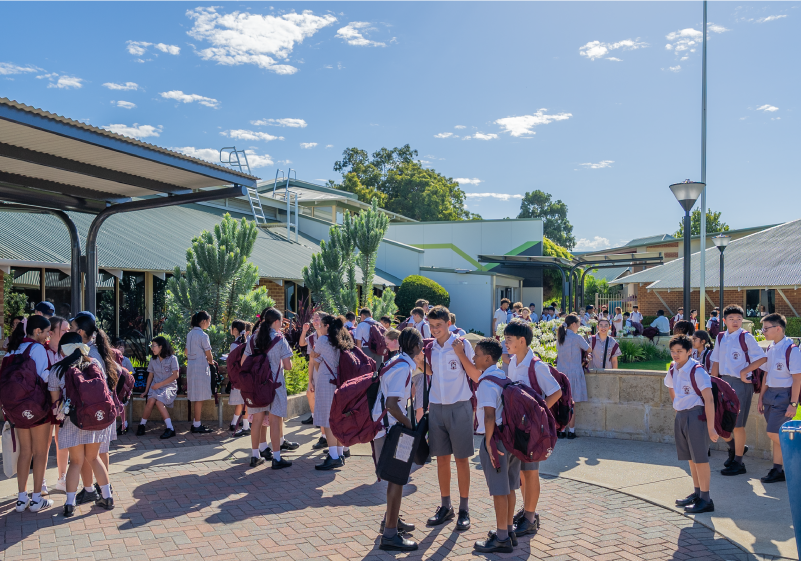
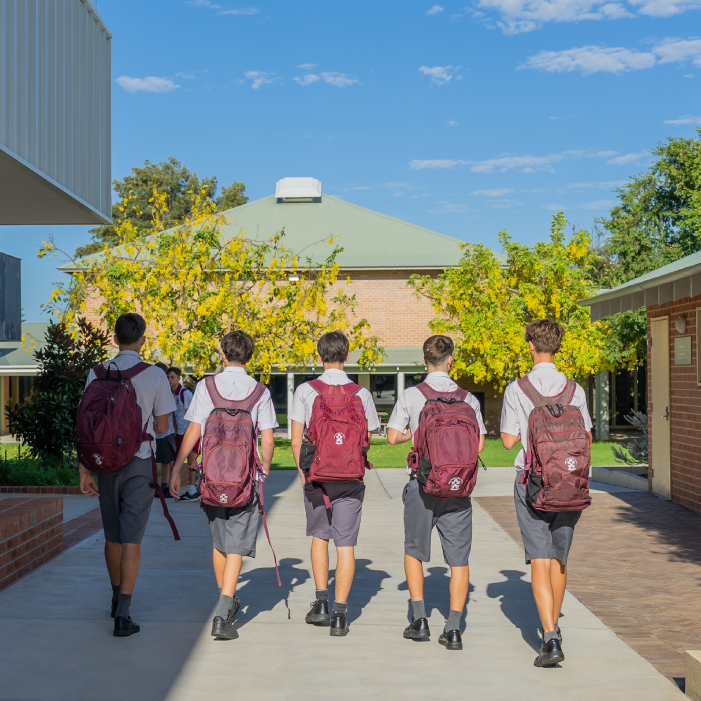
Whether students are travelling to and from school,participating in an excursion, representing the school at a sporting event,visiting a local business or simply wearing the school uniform in the wider community, they remain ambassadors for themselves, their families and ourschool.
This is particularly important when travelling on school buses. Buses are shared spaces, and students have a responsibility to ensurethat their behaviour allows everyone to travel safely and comfortably.Respectful language, following the driver's directions, remaining seatedappropriately and considering the needs of younger students and otherpassengers are all simple demonstrations of maturity.
More broadly, these situations provide valuable opportunities for students to practise something we increasingly want to see in our Middle School students: self-management.
As young people grow older, we gradually move from managing behaviour because an adult is present to making good decisions because we understand that they are the right decisions to make.
That transition is an important part of growing up.
We want our students to develop the confidence to ask themselves:
What is the right thing to do here?
How does my behaviour affect other people?
Would I make the same choice if nobody was watching?
These are bigger questions than simply following a school rule. They are questions of character.
As a school, we will continue to reinforce expectations across all settings in which our students learn and participate. This includes working closely with transport providers, providing clear and consistent expectations for students, and ensuring that leadership and pastoral structures respond appropriately when concerns arise.
We also recognise that developing responsibility is a partnership between school and home. Conversations at home about respectful behaviour, appropriate language, consideration for others and the privilege of representing a school community can have a powerful impact.
Ultimately, our goal is not simply to have students who behave well when they are at school.
Our goal is to develop young people who choose to behave well because they understand who they are and the kind of person they want to become.
Responsibility is not confined to the classroom.
It is demonstrated in the corridors, on the sporting field,online, on the bus and in the wider community.

%20(800%20x%20560%20px).png)