

News
The Value of Handwriting
14 Aug 2026
Tartan Blog

Why Handwriting Still Matters In A Digital World
Drawing on current educational discussions that emphasise authentic learning experiences, meaningful engagement, and thoughtful use of technology, many schools are revisiting the balance between digital and traditional classroom practices; and more specifically the benefits of handwriting verses use of devices.
As technology continues to evolve and become increasingly embedded in education, it is important that schools regularly evaluate its impact on student learning and development. While digital devices may offer opportunities for collaboration, creativity, and access to information, growing evidence from classroom practice suggests that an overreliance on screens can diminish opportunities for students to develop essential foundational skills. For primary-aged students, handwriting remains a critical component of literacy development, supporting memory retention, fine motor coordination, spelling proficiency, and deeper cognitive processing.Re-engaging students in regular handwritten tasks provides opportunities to strengthen these skills while fostering concentration, perseverance, and pride in their work.
The focus should not be to eliminate technology but to restore a balanced approach that places purposeful, hands-on learning at the centre of the primary classroom. By increasing opportunities for handwriting,note-taking, drafting, reflective journaling, and other written tasks, we aim to promote stronger learning outcomes, greater student engagement, and the development of lifelong communication skills. Through a renewed emphasis on handwriting, we can support students in becoming confident, capable learners who are equipped with both traditional and digital competencies.
In today’s increasingly digital world, online learning tools have become integrated into student learning. From interactive literacy programs to collaborative online platforms, technology offers exciting opportunities for engagement and personalised learning. However, this should not come at the expense of student developing required skills in using pen and paper and the developmental advantages that this can offer.

Handwriting is far more than a method of recording information. Research consistently demonstrates that the physical act of writing by hand strengthens memory, concentration, and cognitive development. When students form letters and words manually, they engage multiple areas of the brain associated with language, motor skills, and information processing. This deeper level of engagement helps children retain information more effectively than simply typing or selecting answers on a screen.
For primary-aged students, handwriting is particularly important because it supports the development of foundational literacy skills. Forming letters correctly reinforces letter recognition, spelling patterns, and phonemic awareness. Young learners once they develop automatic handwritings kills are able to focus more attention on the content of their writing rather than the mechanics of letter formation. As a result, they can produce more sophisticated ideas and demonstrate stronger written communication when consistent and regular handwritten tasks are incorporated into their learning experiences.
Handwriting contributes significantly to fine motor development. Controlling a pencil requires strength, coordination, and dexterity in the small muscles of the hand and fingers. These skills extend beyond writing and support a range of everyday tasks, including drawing, cutting, manipulating objects, and participating in practical learning activities. For primary aged students, regular handwriting practice provides valuable opportunities to strengthen these essential motor skills.
When looking at digital platforms, these may provide some positives for learning, including immediate feedback and extended opportunities for differentiation. Students can access multimedia resources, collaborate with peers, and engage in interactive learning experiences that may be difficult to replicate using traditional methods alone. Technology can be a useful tool to support students with additional learning needs by providing opportunities to reduce their cognitive load through the use of speech-to-text or adaptive learning programs.
Online tools are also useful in developing the digital literacy skills that students need to support their education and to be future ready. The ability to navigate digital environments, communicate online, evaluate information, and create digital content has become an essential component of the world we live in today. Schools still have a place in preparing students for this world in which technology will continue to play a central role.
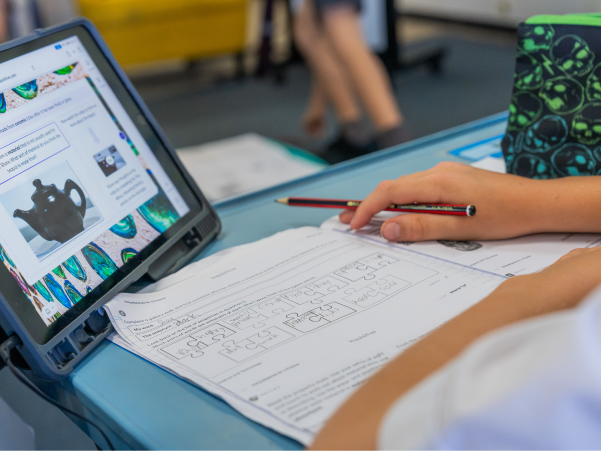
However, despite having many benefits, an over reliance on digital tools can present challenges. Extended screen time contributes to reduced attention spans, increased distraction, and decreased opportunities for sustained concentration. Some studies suggest that students may process information more superficially when typing or interacting with digital content compared with handwriting. Furthermore, the convenience of technology should not come at the cost of neglecting foundational skills that remain relevant throughout life.
Handwriting should remain or be regained as a core aspect of primary school education, particularly in the early years when literacy, fine motor skills, and cognitive foundations are being established. Onlinetools should only be integrated strategically when it is necessary to enhance learning or to develop digital competencies.
As educators, our goal is to equip students with the broadest possible range of skills. Handwriting develops thinking, memory, creativity, and fine motor control, while online tools can foster collaboration, accessibility, and digital fluency. When used as a support toenhance foundational skills attained through handwriting, they can create apowerful learning environment that supports both academic achievement and future readiness.
Ultimately, handwriting remains an essential skill forprimary-aged students. In a world increasingly dominated by screens, the simple act of putting pencil to paper continues to offer profound educational benefits that technology cannot replace.
Additional resources
5 Reasons Children Still Need to Learn Handwriting
Handwriting is Still Important in Primary School



%20(800%20x%20560%20px).png)